Closing the Gap Between Insight and Action
What ABB's Acquisition of Rotork Reveals About the Next Source of Industrial Value
Walk through almost any industrial operation today and you'll find a remarkable contrast.
Companies have more sensors, more connectivity, more software, and more visibility than at any point in history. Yet when a production line slows down, a quality issue appears, or a critical asset begins to drift, the response often remains surprisingly manual.
Production data sits in one system. Maintenance records sit in another. Asset information may be incomplete. The person who has seen the problem before may be on another shift, another site, or nearing retirement.
This gap helps explain why ABB's acquisition of Rotork is worth paying attention to. The headlines focus on the $5.5 billion price tag. The more interesting question is what the transaction signals about where industrial value is being created.
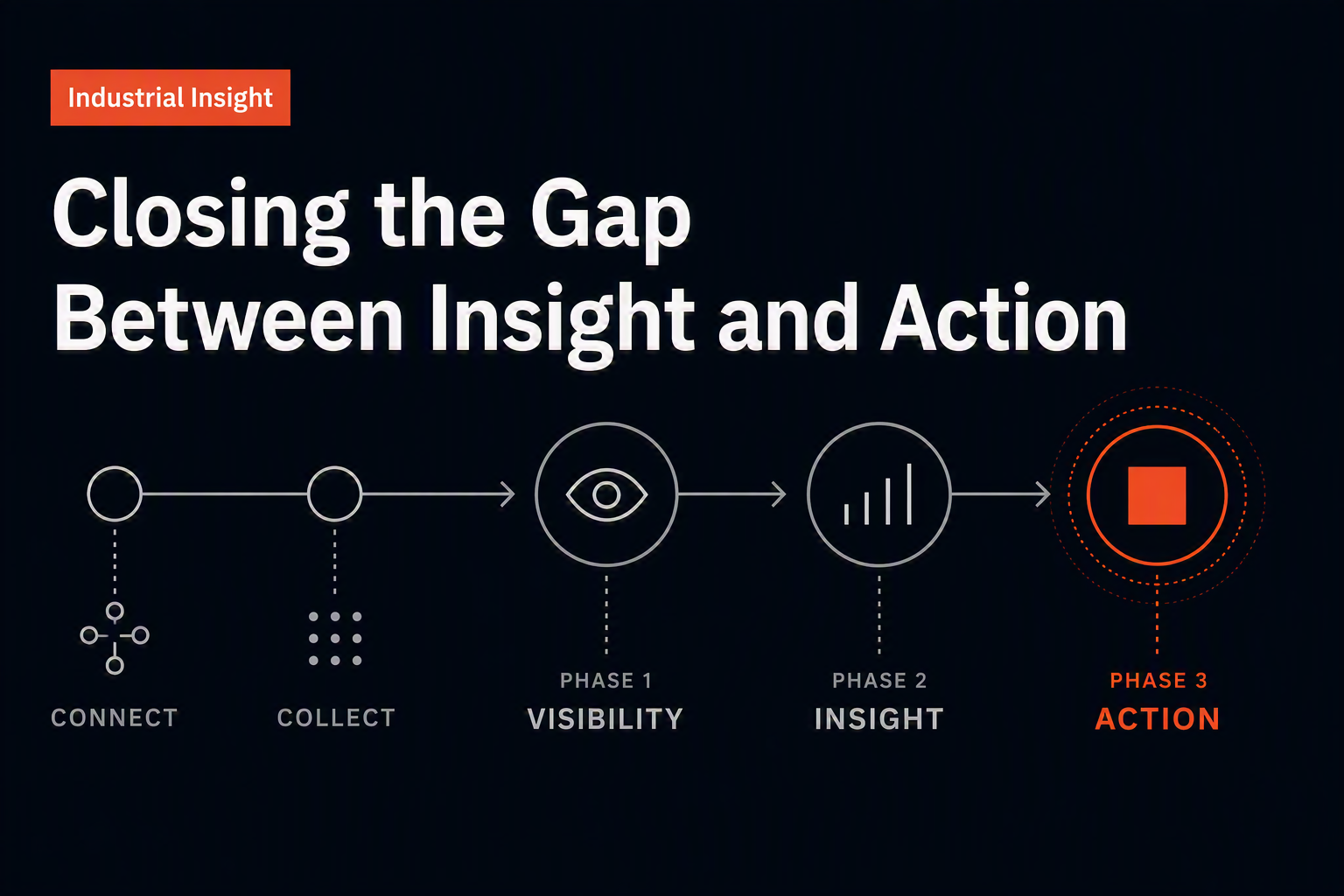
Over the past two decades, industrial transformation has progressed through three phases.
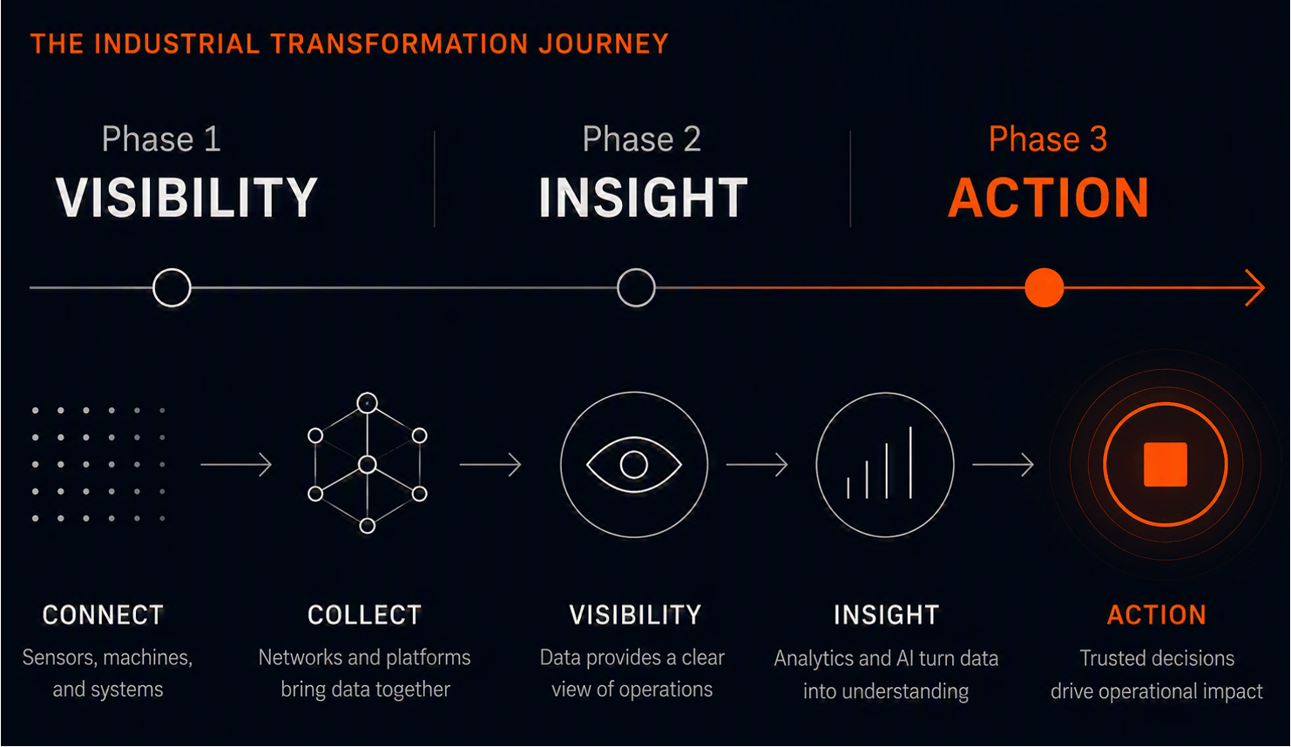
The first phase was visibility.
Industrial companies invested heavily in connecting assets, digitizing operations, and collecting data. Sensors, networks, cloud platforms, and software systems dramatically improved visibility into what was happening across plants, facilities, and infrastructure.
The second phase was insight.
With increasing amounts of operational data available, organizations turned their attention to analytics, machine learning, and AI. The goal shifted from understanding what is happening to understanding why it is happening and what might happen next.
Predictive maintenance, anomaly detection, and process optimization became major priorities.
The industry made significant progress. Yet a new challenge emerged as a result.
Teams could see issues earlier, identify patterns at scale, and anticipate what was likely coming next.
But the most important question often remained unanswered:
What should we do next?
That question defines the industry's third phase: action.
Many industrial organizations now find that generating information is no longer their biggest challenge. The challenge is turning information into operational decisions; and from there, turning operational decisions into measurable outcomes.
A maintenance manager rarely asks for more data. The vibration was already detected. The asset was already flagged. The real work begins afterward.
-
Someone must determine whether the alert matters.
-
Someone must understand the operational context.
-
Someone must decide whether intervention is necessary today, next week, or at all.
Those decisions do not happen inside dashboards. They happen inside operations.
This is what makes ABB's focus on Rotork so interesting. Rotork operates close to the field-device layer, where information is translated into decisions and decisions are translated into action.
ABB has described the strategic rationale around strengthening the "sense-control-act" loop. Viewed through that lens, the transaction looks less like a traditional automation acquisition and more like a bet on where industrial value will increasingly reside.
The companies that succeed in this next phase will come from different backgrounds. Some will emerge from automation. Some from software. Some from AI.
What they will share is a common objective:
Helping industrial organizations move more effectively from knowing to doing.
Action in industrial environments is different from action in digital environments. A recommendation is only valuable if operators trust it. A decision is only useful if ownership is clear. An autonomous action is only acceptable if it can be executed safely, audited afterward, and integrated into the systems and people that govern the operation.
— Michael Dolbec, Managing Partner, Momenta
For that reason, the next phase of industrial transformation will not be defined simply by smarter algorithms. It will be defined by trusted action-systems that help organizations make decisions faster, execute them safely, and continuously learn from the outcomes.
Viewed through that lens, ABB's acquisition of Rotork may signals something larger than a move in industrial automation. It reflects a growing recognition that the next source of value lies not in creating more visibility or more insight, but in closing the gap between insight and action.
The defining industrial question is no longer:
What's happening? Or even: Why is it happening?
Increasingly, the question is:
What should we do next...and can we trust the answer?
_____________
Building the systems that will define the Age of Industrial Action?
Momenta partners with founders transforming operational data into trusted decisions, autonomous workflows, and measurable outcomes across energy, manufacturing, smart spaces, and supply chains.
Start a conversation with our investment team.
_____________
Momenta is the leading Industrial Impact® venture capital firm, accelerating industrial innovators across energy, manufacturing, smart spaces, and the supply chain. Our team of deep industry operators has helped scale industry leaders and innovators to improve critical industries, the environment, and people's quality of life for over a decade. For more information, please visit http://www.momenta.vc